
How to Build an AI Agent Without API Keys
You wanted to build an agent this weekend. You opened the docs, started a new project directory, and within ten minutes you were looking at a list you didn’t sign up for: create an Anthropic account, generate an API key, create a separate OpenAI account for fallback, set up a search API subscription, configure an email sending service, figure out how your agent will pay for anything without your personal credit card attached. That’s before you’ve written a single line of agent logic.
Most agent projects stall here. Not because the LLM isn’t capable enough. Because the plumbing overhead is a full project in itself.
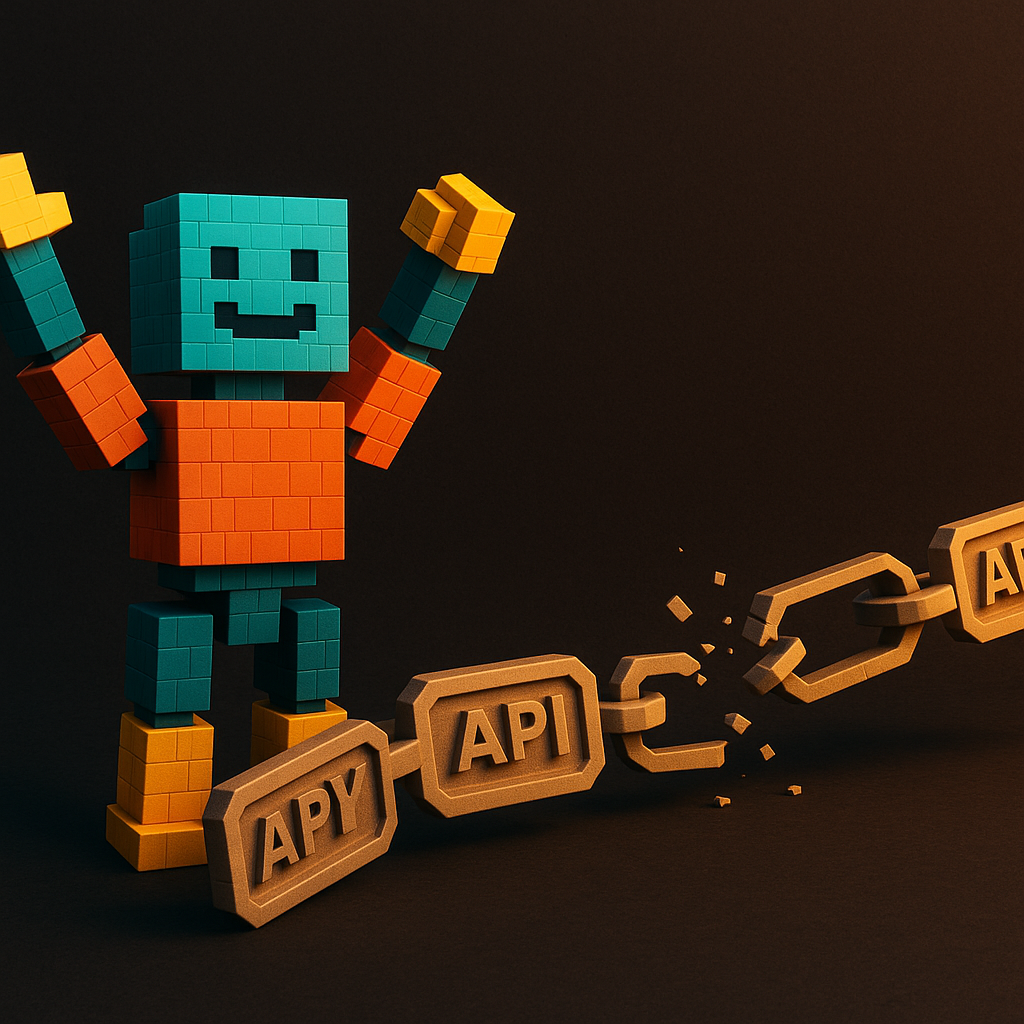
The API key problem
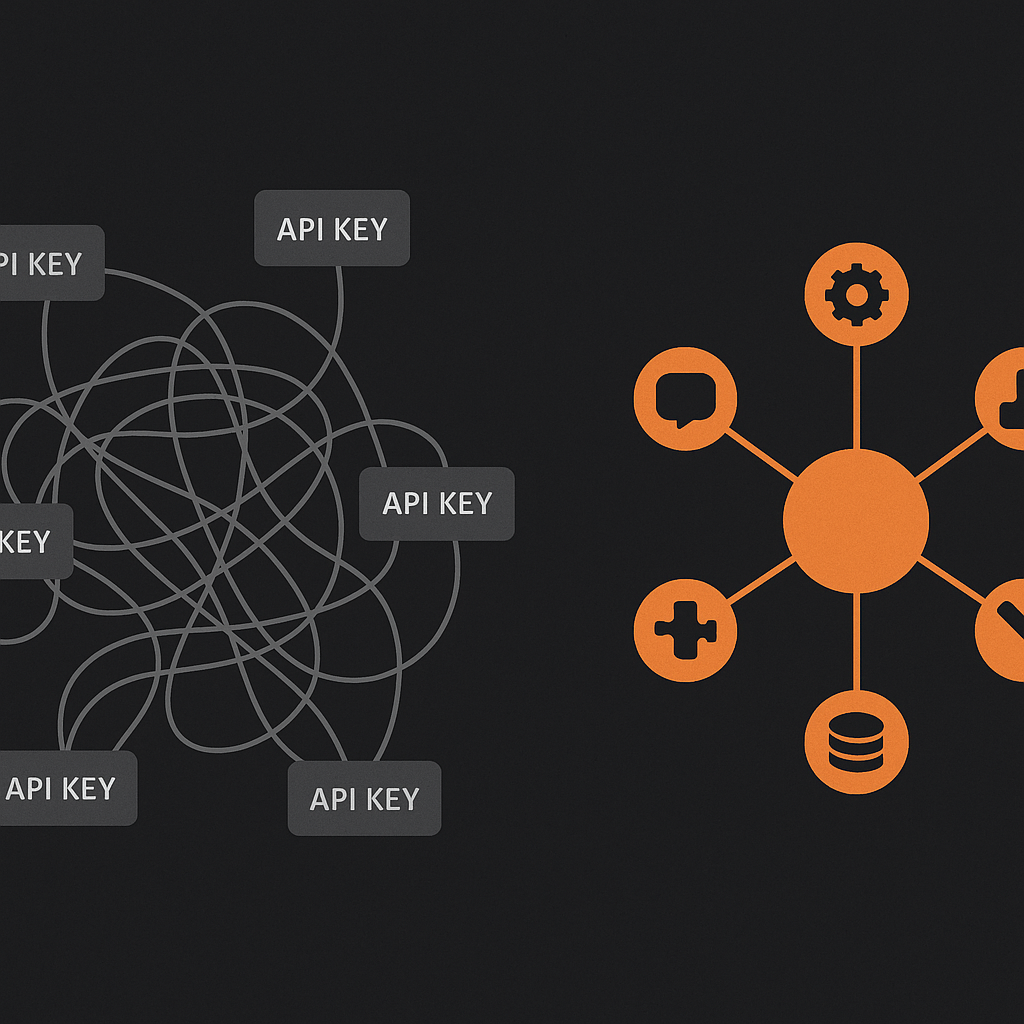
The average developer building a production agent manages somewhere between eight and twelve separate vendor relationships. Each one requires an account, an API key, a billing setup, and eventually — key rotation, rate limit monitoring, and a new signup every time a useful new model ships.
Here is what that stack looks like in practice:
Anthropic API key         → account, billing, rate tier selection
OpenAI API key            → second account, second billing setup
Web search API            → Serper, Brave, or SerpAPI — third account
Image generation          → Stability AI, Replicate, or DALL·E — fourth account
Code execution sandbox    → Modal, E2B, or similar — fifth account
Email sending             → SendGrid, Mailgun, or Postmark — sixth account
File storage              → S3 bucket, IAM roles, lifecycle rules — seventh account
The monthly cost compounds fast. According to competitive research across common DIY agent stacks, developers building agents on top of the standard mix of AWS or GCP, two AI provider accounts, and three to five additional service APIs are typically spending $80–200 per month — on infrastructure alone, before any actual agent logic runs.
That’s the visible cost. The invisible cost is worse: every new model that ships requires a new account before you can use it. Every API key that expires or gets rate-limited at 2am is another incident. Every time you hand off the project to a collaborator or a CI/CD environment, you’re managing credential distribution on top of everything else.
"Most developers hate APIs — Stripe built an entire culture around making clean, ergonomic ones. We're trying to do away with the need for humans to worry about them in their entirety. On our side, you shouldn't need to think about API keys. Your agent handles all of the integration work, and when it can't, it should be emailing support for help."
 Louis Amira — Co-founder, ATXP
The credential overhead is the tax you pay before you get to build the thing you actually wanted to build. And it scales with how ambitious your agent is — more capabilities means more keys, more accounts, more maintenance surface.
Secure vibe coding @v0 has now prevented LLMs from writing vulnerable code in 16,200+ generated applications. Concretely, it's prevented *sixteen thousand* token leaks, from AI api keys to database compromises.
— Guillermo Rauch (@rauchg) April 2025
What your agent actually needs
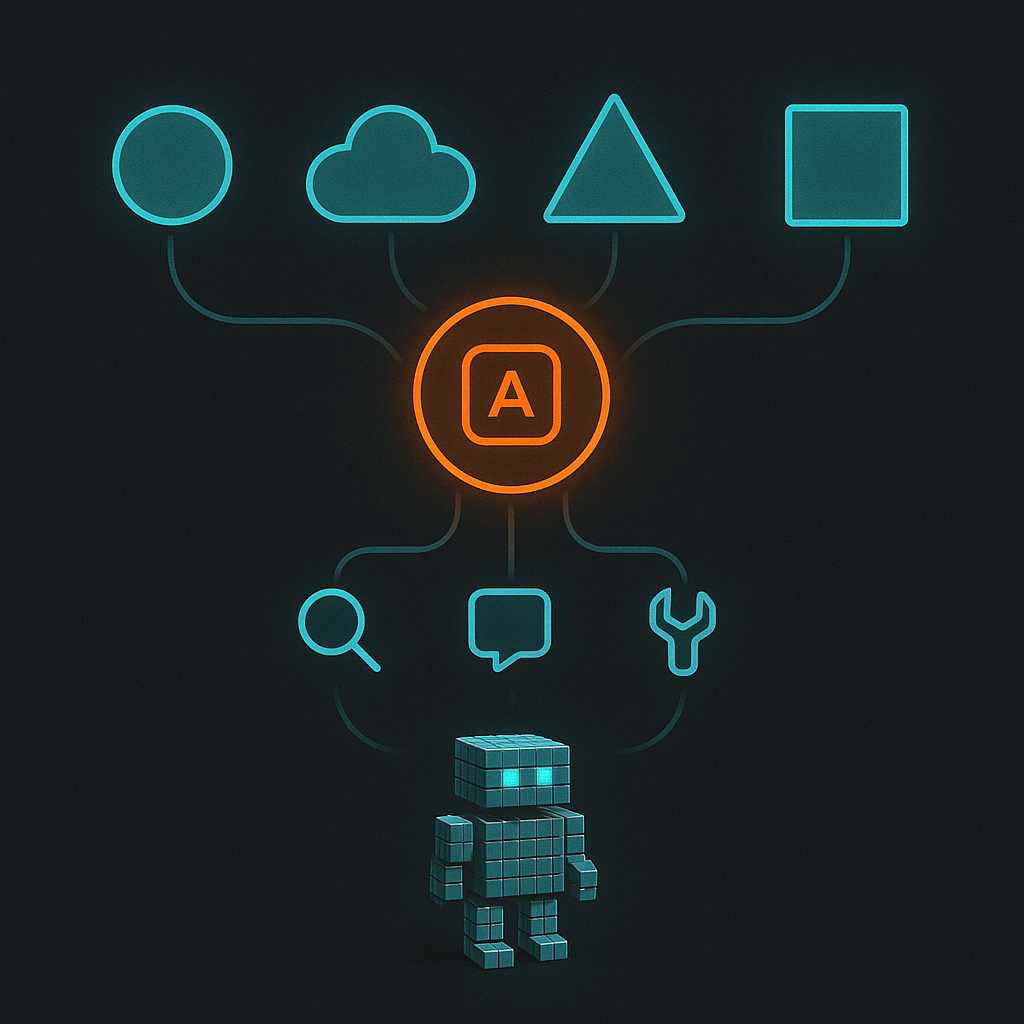
Building an AI agent without API keys means giving your agent a managed infrastructure account instead of a collection of individual vendor credentials. The agent receives a single persistent identity, a pre-funded payment account for pay-as-you-go tool calls, a dedicated email address, and access to a unified tool catalog — including an LLM gateway covering multiple models. Authentication with underlying vendors is handled by the infrastructure provider on the agent's behalf.
To understand why npx atxp works, it helps to understand what an agent actually needs to function — and why a pile of API keys is a fragmented way to provide it.
Building an AI agent without API keys means giving your agent a managed infrastructure account instead of a collection of individual vendor credentials. The agent receives a single persistent identity (an @handle), a pre-funded payment account for pay-as-you-go tool calls, a dedicated email address, and access to a unified tool catalog — including an LLM gateway covering multiple models. Authentication with underlying vendors is handled by the infrastructure provider on the agent’s behalf. The developer registers once and builds against a single interface rather than coordinating across separate services.
That definition describes a different architecture — not a workaround for API key management, but a replacement for it.
An agent that acts in the real world needs four specific things. Most explanations of agent development skip this and assume the infrastructure is already in place. It rarely is.
Identity — a persistent handle that other systems can recognize. Without one, your agent borrows your developer credentials for every interaction. That creates accountability gaps, rate limit collisions, and no way to build a history under the agent’s own name. An agent handle is the agent’s own recognized identity, not a borrowed one.
Payments — the ability to pay for tool calls without human involvement. Traditional payment infrastructure is designed for humans who log in, manage billing cycles, and authorize transactions. Agents make tool calls at runtime. An agent that can’t pay for the tools it needs either requires human approval at each step or can’t act at all.
Email — a real address for sending and receiving. A surprisingly large portion of real-world workflows run through email: confirmations, verification links, replies, receipts. An agent without its own email address can’t participate in those flows.
Tools — the actual capabilities the agent exercises. Web search, browsing, code execution, image generation, LLM inference, file storage. The breadth of tools determines the breadth of what the agent can accomplish.
Managing these four things through individual API keys means treating each one as a separate vendor relationship. That works — it just doesn’t scale cleanly and it doesn’t match how agents operate. For more on what each of these layers does in practice, see What Is an AI Agent?
| Infrastructure layer | DIY stack approach | With ATXP |
|---|---|---|
| LLM access | Separate API key per provider | Unified gateway — Claude, GPT, Gemini, Llama |
| Web search | Serper, Brave, or SerpAPI subscription | Included — no separate key |
| Image generation | Stability AI, Replicate, or DALL·E account | Included — no separate key |
| Code execution | Modal, E2B, or similar setup | Included — no separate key |
| Agent identity | None — borrows developer account | Unique @handle on registration |
| Agent email | None — or a forwarded alias | @atxp.email address on registration |
| Payments | Manual — human approval per transaction | Pre-funded IOU account, 10 tokens free |
| New model ships | New account required | Appears automatically |
| Monthly baseline cost | $80–200 across subscriptions | $0 — pay per tool call only |

The 7-character solution
Running npx atxp sets up your entire agent infrastructure in a single command — identity, payments, email, and 14+ tools, no API keys required.
npx atxpRunning it does five things: it installs the ATXP skill in your agent, registers the agent with a unique handle, creates a pre-funded payment account (10 free IOU tokens on first registration), assigns an @atxp.email address, and unlocks the full tool catalog. Your agent immediately has access to web search, web browsing, code execution, image generation, audio generation, LLM inference across Claude, GPT-4, Gemini, and Llama, file storage, and more.
No separate accounts. No API keys to manage. No monthly subscriptions to configure.
The LLM gateway deserves particular attention: instead of maintaining separate keys for Anthropic, OpenAI, and Google, your agent calls a single ATXP endpoint and specifies the model. Switching from Claude to GPT-4 is a parameter change, not an account change. When a new model ships — from any of the providers — it appears in your agent’s available tools automatically. You don’t need to create a new account or update any configuration.
"Given how fast we grew, most everything broke. People tested things in interesting ways — having a conversation with one model and then switching to another mid-conversation. We love being part of the experimentation process, and all the new and novel bugs that pop up because of it — we have AI help us go fix them."
Louis Amira — Co-founder, ATXP
ATXP gives your agent identity, payments, email, and 14+ tools — one command, no subscriptions, no API keys.
npx atxpYour agent gets 10 free IOU tokens on registration and pays per tool call after that. Full documentation at docs.atxp.ai → — and see /for/developers for framework-specific integration guides.
What your agent can do now
Once npx atxp runs, your agent has a real identity, real spending authority, and access to a full tool catalog. Here’s what that looks like in practice.
Multi-model inference without credential switching. Your agent can call Claude for complex reasoning, GPT-4 for a specific task, and compare outputs — all from a single gateway, deducted from the same IOU balance. No credential rotation, no environment variable juggling between models.
"Oftentimes people ask what ATXP can do, and they get a list of all of the interesting things — creating an email account, sending a text message, making an image or video. It's really a 'what magic tricks do you know' sort of exercise, and then it's a matter of what people find most interesting and novel."
Louis Amira — Co-founder, ATXP
End-to-end research pipelines. An agent that needs to search, browse specific pages, synthesize content, and generate a report used to require coordinating three or four separate API integrations. With ATXP, those are all tool calls on the same account — the agent plans and executes the full pipeline in a single session without context-switching between credentials.
Email in the loop. The @atxp.email address is live the moment your agent registers. If your workflow needs to send confirmations, receive replies, or participate in an email thread as the agent — that infrastructure already exists. No SendGrid account, no DNS configuration, no alias routing from your personal inbox.
Cross-framework compatibility. The ATXP skill works with Claude Code, LangChain, CrewAI, AutoGen, and the OpenAI Agents SDK. If you switch frameworks or run the same agent logic against a different orchestration layer, the tools come with it.
Here’s what the before/after looks like on the infrastructure side:
Before — .env file fragment for a basic agent:
ANTHROPIC_API_KEY=sk-ant-...
OPENAI_API_KEY=sk-...
SERPER_API_KEY=abc123...
STABILITY_API_KEY=xyz...
AWS_ACCESS_KEY_ID=AKIA...
AWS_SECRET_ACCESS_KEY=...
S3_BUCKET_NAME=my-agent-files
SENDGRID_API_KEY=SG.abc...
After:
npx atxpAll of those capabilities are now available as tool calls from your agent’s registered account. Your .env file doesn’t need any of them.
On r/LocalLLaMA and r/MachineLearning, the recurring theme in production agent discussions is that the gap between “demo works” and “ships to production” is almost always infrastructure — key rotation, rate limits, the inability to give an agent actual spending authority without attaching a human credit card. The LLM quality isn’t the bottleneck. The plumbing is.
Frequently asked questions
Do I really need API keys to build an AI agent?
No. The traditional approach requires a separate key for every service your agent touches — an LLM provider, a search API, an image generator, and so on. ATXP consolidates all of that into a single account registered with one command: npx atxp. Your agent gets identity, payments, email, and 14+ tools without managing a single external API key.
What does npx atxp actually do?
It installs the ATXP skill in your agent. On first run, it registers your agent and creates a unique agent handle (@handle), an @atxp.email address, and a pre-funded payment account with 10 free IOU tokens. From that point, your agent can call web search, browsing, code execution, image generation, LLM inference, file storage, and more — without any additional setup. Full documentation is at docs.atxp.ai.
What AI models can my agent access through ATXP?
Claude (Anthropic), GPT-4 and later (OpenAI), Gemini (Google), and Llama — all through a single unified gateway. When a new model ships, it appears in your agent’s available tools automatically. No new API keys, no new accounts required on your end.
Is there a monthly subscription?
No. ATXP charges per tool call, deducted from your agent’s IOU balance. You start with 10 free tokens on registration and add more when needed. You pay only for what your agent actually uses — no baseline subscription, no seat fees, no idle costs. This is a meaningful difference from the $80–200/month baseline that a typical DIY stack requires before your agent does anything.
Which agent frameworks does ATXP support?
Claude Code, LangChain, CrewAI, AutoGen, and the OpenAI Agents SDK. If you’re building from scratch or using a different framework, the docs.atxp.ai cover integration for each. ATXP drops in as the infrastructure layer — identity, payments, and tools — so you don’t need to wire each service separately.
What happens when a new AI model is released?
Nothing on your end. New models appear automatically in your agent’s available tools as ATXP adds them to the gateway. No new account, no key rotation, no configuration update. This is one of the most concrete differences from managing API keys directly: you’re building against an infrastructure layer that keeps up with the model landscape, not against a static set of credentials you have to maintain yourself.
API key management is a problem that emerged because the tools were built for developers, not for agents. Developers log in to dashboards, manage billing cycles, and rotate credentials on a schedule. That model doesn’t transfer to software that runs autonomously and makes hundreds of tool calls without human involvement.
The infrastructure layer should match how agents actually work. A single registered account with a persistent identity, pre-funded spending authority, a real email address, and a unified tool catalog is the right architecture for an agent. That’s what npx atxp provides — not a shortcut around proper setup, but the setup that matches the problem.
The interesting work in agent development is designing goals, shaping behaviors, and building workflows that are actually useful. Seven characters gets the plumbing out of the way.
npx atxpStart at docs.atxp.ai for framework-specific integration, or see /for/developers to verify your framework is supported before you run the command.