
Why We Think AI Subscriptions Are Kind of Nuts
We’re going to say something that’s slightly awkward for a company selling AI infrastructure: we think the subscription model for AI tools is kind of nuts. Not because subscriptions are evil — they work fine in the right context. But for agents specifically, the model was designed for a different type of user and the fit is poor.
Here’s the case.
Who the subscription model was built for
Subscription fatigue is the accumulated financial and cognitive burden of managing multiple recurring software charges — paying for access you may or may not use, remembering renewal dates, and deciding which subscriptions to cancel. For AI tools specifically, it compounds because agents have bursty, task-driven usage that makes flat monthly pricing a poor match: you pay the same whether the agent ran continuously or sat idle for the entire month.
The SaaS subscription model was designed in a world where software users are humans who show up every day. Monthly active users. Daily habit loops. Subscription pricing makes sense for that user — they get consistent value, the provider gets predictable revenue, and the relationship is stable.
The math breaks down when the user is an agent.
Agents don’t have habits. They have tasks. A research agent might make zero calls for six days and then run 200 tool calls on day seven when a competitor updates their pricing page. A monitoring agent might check in once an hour with minimal processing. A commerce agent might sit completely idle for three weeks and then run a complex multi-step purchase workflow.
A flat monthly charge doesn’t fit any of these patterns. The subscription charges the same regardless of whether the agent ran constantly or touched nothing. The provider profits from the idle time. The user pays for capacity they didn’t use.
The honest economics of subscription software
"Everyone in the subscription space has always known that business model is great — it preys on the large number of users who don't spend the full balance. People are paying for things they're not using. Pay-per-use flips that. You pay for exactly what you use and nothing else."
 Louis Amira — Co-founder, ATXP
This isn’t a criticism unique to AI tools. It’s true of every subscription business. The model works because a large number of customers pay for more than they use, subsidizing the heavy users and generating margin for the provider.
That’s not inherently unfair — you’re paying for access and the option value of using it when you need it. But it’s worth being clear-eyed about who benefits from the arrangement.
For human users with consistent, daily use patterns, the subscription is often a good deal — the access value is real and the cost is predictable. For agents with variable, task-triggered usage, the math usually doesn’t hold.
What you’re actually paying for with a subscription
A $20/month AI subscription buys you:
- Access to a capable model (ChatGPT Plus → GPT-4o, Claude Pro → Claude Sonnet)
- Priority access during high-demand periods
- Some included tools (browsing, code execution, image generation — often limited)
- Predictable billing
What it doesn’t buy you:
- Agent identity (a persistent handle your agent owns)
- A payment account your agent can spend from
- A dedicated email address
- Unlimited tool calls (most subscriptions have rate limits)
- Access to the full API surface (subscriptions often have fewer options than direct API access)
- Any of the other tool providers you need (web search API, code sandbox, storage)
By the time you’ve covered everything a production agent actually needs, you’re paying the subscription plus the APIs it doesn’t include. The full cost breakdown →
The subscription accumulation problem
It’s not one subscription — it’s the stack.
| Provider | Subscription | Monthly cost |
|---|---|---|
| ChatGPT Plus | GPT-4o access | $20 |
| Claude Pro | Claude Sonnet access | $20 |
| Perplexity Pro | Better search | $20 |
| Cursor Pro | Coding agent | $20 |
| GitHub Copilot | Code generation | $10–19 |
| Midjourney | Image generation | $10–30 |
| Various API tools | Search, browsing, etc. | $20–100+ |
| Total | $120–229+/month |
And that’s before counting the time spent managing renewal dates, usage dashboards across seven different interfaces, and credential rotation across all of them.
Pay-as-you-go replaces that stack — not by eliminating the tools, but by consolidating them. One account. One balance. One dashboard. You see exactly what ran and what it cost. Nothing you didn’t use, nothing you forgot to cancel.
The case for subscriptions (honestly)
Subscriptions aren’t universally wrong. They make sense when:
- You use the full capacity consistently — if you’re in Claude Pro eight hours a day and it would cost $35+ at API rates, the $20 subscription is a bargain
- You need the included priority access — during peak demand, subscription users get priority queue; API users may see delays
- Predictable budgets matter more than cost optimization — for personal use where simplicity beats optimization, a flat monthly number is easier to manage
- You’re not building agents — for human users who interact conversationally, the subscription model fits how they actually use the product
The argument against subscriptions is specific to agent workloads with variable usage. If your usage is consistent and heavy, run the math — the subscription may win.
What pay-as-you-go actually looks like
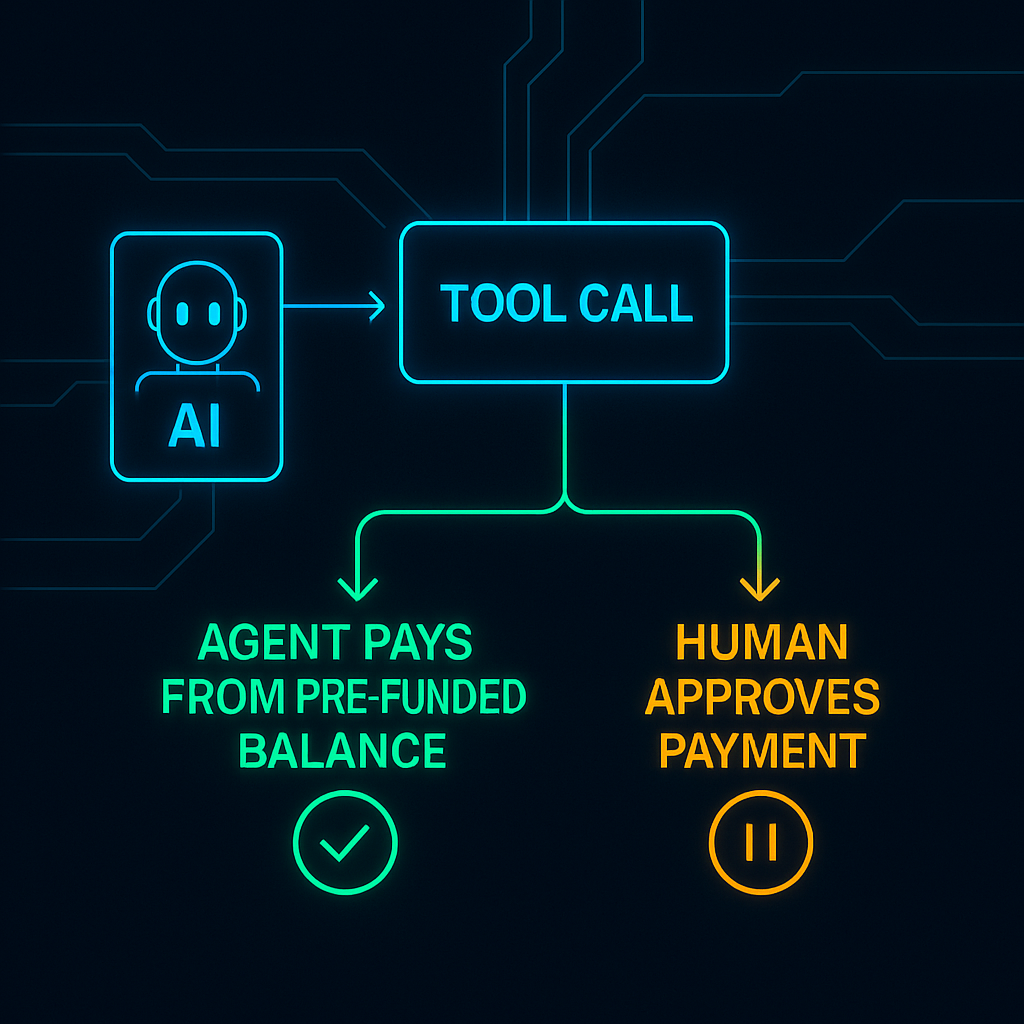
ATXP’s model: pre-fund an IOU balance. Every tool call, API request, and infrastructure use deducts from that balance. Nothing charges automatically. Nothing renews.
npx atxpYou get 10 free IOU tokens on registration. Add more when you need them. Your agent spends only what you’ve loaded — the ceiling is structural, not just a setting.
For light usage: typically under $5/month. For moderate automation: typically $10–30/month, tied directly to what ran. For heavy production pipelines: scales with actual usage, with full visibility per call.
There’s no $20 floor whether you run or not. There’s no guilt about subscribing to something and not using it. There’s no automatic charge on the first of the month for capacity you forgot you had.
That’s what we mean by pay-per-use aligning incentives. You pay when value is delivered. How pay-per-use agent commerce works →
Frequently asked questions
Why are AI subscriptions a bad model for agent workloads?
Agents have bursty usage — heavy when a task fires, idle otherwise. Flat monthly subscriptions charge the same regardless. Pay-as-you-go charges only for actual activity and matches the cost structure to the usage pattern.
What’s wrong with paying $20/month for AI tools?
Nothing if you consistently use the full capacity. Most users don’t. Research on subscription software usage shows the majority of subscribers consume under 30% of included capacity. The provider profits from the gap; the user pays for what they don’t use.
Is there an alternative to AI subscriptions?
Yes. Pay-as-you-go: per token for LLMs, per call for tools. ATXP uses an IOU token model — pre-fund a balance, spend per call, nothing automatic. How to get an AI agent →
What is subscription fatigue?
The accumulated cost and cognitive burden of managing 30+ recurring charges. AI tools added several to the stack. Pay-as-you-go eliminates idle cost and renewal anxiety.
Does ATXP have a subscription?
No. IOU tokens, pre-funded balance, pay per call. How ATXP pricing works →
Are AI subscriptions ever worth it?
Yes — when you consistently max out included capacity. If you’re in Claude Pro several hours daily and it would cost more at API rates, the $20 subscription wins. For variable agent workloads, it usually doesn’t.